Achieving Clean Bone-Pull Tenderness for GTA Outdoor Events
Introduction
Knowing how to make ribs fall off the bone starts with a common misconception in barbecue catering: that tender ribs should completely fall apart at the slightest touch. Often, ribs are boiled or steamed until the meat detaches entirely, relying heavily on sauce for flavor. However, true barbecue enthusiasts know there is a distinct difference between overly soft meat and genuine tenderness.
Authentic rib tenderness is defined by what pitmasters call a "clean pull." The meat should give way easily to a bite, separating cleanly from the bone while maintaining its structure. It should feature a robust, caramelized bark on the outside and a deep pink smoke ring just beneath the surface. Properly smoked ribs hold their shape beautifully on the plate, offering a rich, natural flavor that requires no extra sauce.
This is the hallmark of authentic Southern barbecue, and it captures what guests truly desire when they ask for "fall-off-the-bone" ribs. The finest ribs don’t collapse on their own; instead, they yield perfectly because the tough connective tissues have been slowly rendered by hours of low heat and wood smoke.
At BBQ Feast, we have been crafting ribs to this exact standard for events across Southern Ontario and the GTA since 1998. As a family-owned business operating from our farm in Lakeside, Ontario, we bring self-contained mobile rigs, commercial-scale smoking capabilities, and live-fire charcoal pits directly to your venue. This guide explores the careful process behind achieving true rib tenderness and what it takes to deliver that standard consistently for a crowd.
Key Takeaways
- The true standard for tenderness: A perfect "clean pull" means the ribs yield effortlessly to a bite while maintaining their structure, caramelized bark, and signature smoke ring, rather than becoming overly soft.
- Authentic methods over shortcuts: While boiling or steaming are common ways to tenderize meat quickly, these methods compromise the natural texture and miss out on the rich depth of wood smoke.
- The science of slow cooking: Genuine tenderness is achieved by slowly rendering collagen through a long, low-temperature cook, rather than relying on steam or high heat.
- Our signature process: BBQ Feast prepares ribs "low and slow," finishing them on-site over live charcoal to guarantee a perfect bark and authentic Southern flavor.
- Fully equipped for any venue: Our mobile rigs provide their own power, refrigeration, water, and tenting, allowing us to serve premium, pit-quality barbecue anywhere across the GTA without relying on site utilities.
Rib Cooking Methods Compared
The quality of catered ribs comes down entirely to the preparation method. Here is a look at how the three most common approaches compare in terms of texture, flavor, and their ability to maintain exceptional quality at large-scale events.
| Cooking Method | Heat & Smoke | Texture & Bark | At Event Scale |
|---|---|---|---|
| Boiling or steaming | High-humidity steam, no smoke. | Soft and soggy, with no bark at all. | Fast but low quality. Leans on sauce to make up for lost flavour. |
| Gas grill or electric oven | Direct gas heat or a static bake. | Dry exterior, uneven render, easy to scorch. | No real hardwood flavour. A flat, one-note result. |
| Hybrid wood-and-charcoal smoking | Low-and-slow smoke, then a live charcoal finish. | Clean bone-pull, dark bark, and a rich pink smoke ring. | Consistent at high volume, with authentic Southern flavour on every plate. |
That final approach highlights the true difference your guests will experience. At BBQ Feast, our entire operation is dedicated to delivering that exact standard consistently, whether we are catering an intimate gathering of 50 or a large-scale event for several thousand.
The Science of Tender Ribs, in Plain Terms
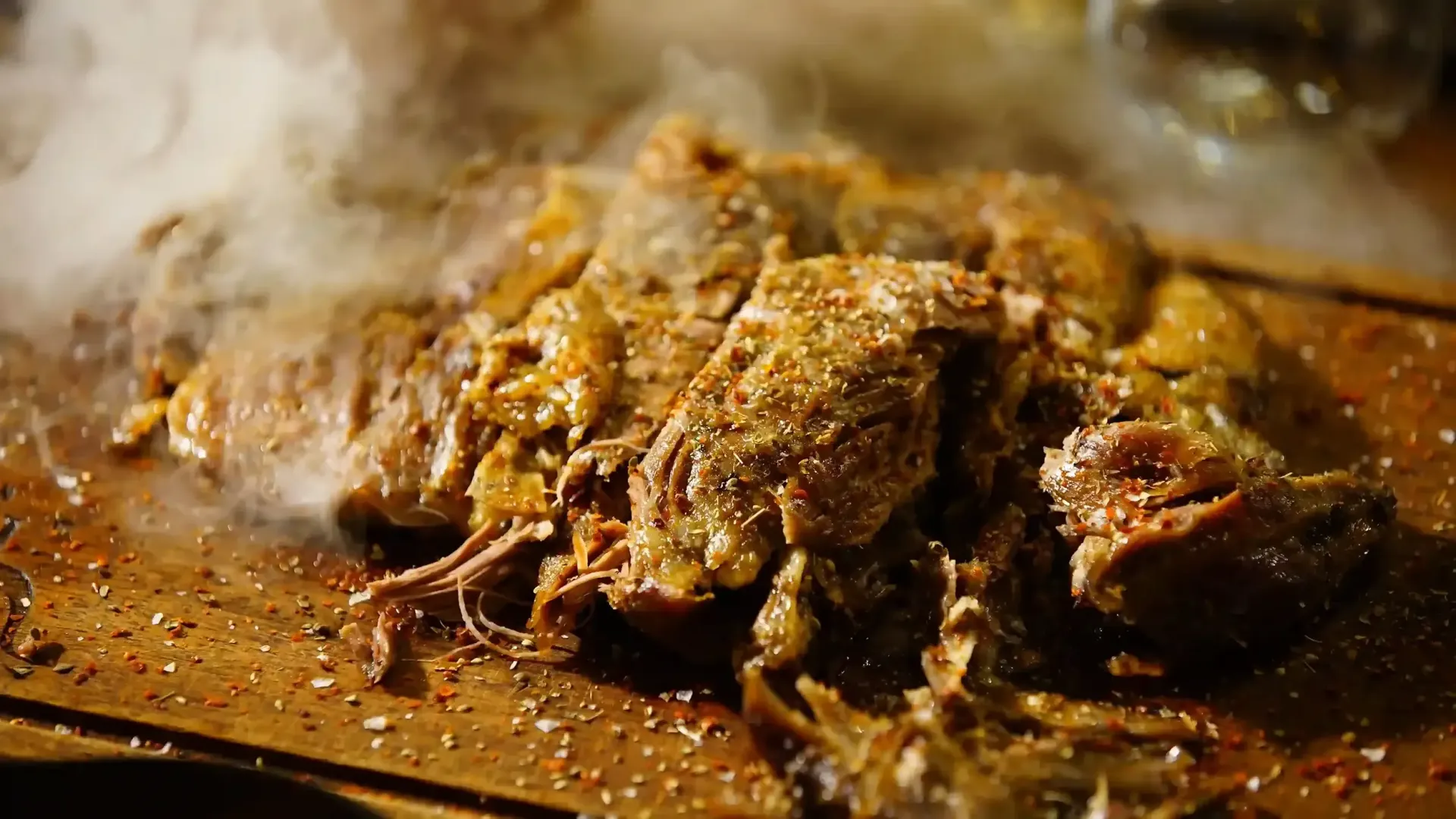
Ribs naturally contain tough connective tissue known as collagen. Cooked too quickly, this tissue seizes, making the meat dry and chewy. But with a steady, "low and slow" approach, the collagen gradually melts into rich gelatin, creating barbecue’s signature tender bite. This natural transformation requires hours of precise temperature control and simply cannot be rushed or forced with shortcuts like steaming.
Quality smoke is just as critical. Our on-site pits rely exclusively on pure lump hardwood charcoal to produce the clean, light smoke pitmasters prize. This infuses deep flavor without the harshness or missing notes typical of standard briquettes or gas units. Managing this clean fire is an art our team has spent decades refining.
This philosophy drives BBQ Feast’s signature hybrid approach. The crucial low-and-slow smoking happens overnight in our commercial smokers, ensuring absolute consistency across every rack. On the day of the event, we finish the ribs on-site over live charcoal. This final step caramelizes the bark and fills the air with a fresh-off-the-fire aroma, delivering perfect consistency paired with authentic live-fire character.
Logistics, Safety, and Volume Dynamics
Crafting exceptional ribs is only half the process; delivering them hot, safe, and perfectly tender to hundreds of guests requires specialized logistical expertise. Under Ontario Regulation 493/17 (Food Premises), hot food must be maintained at or above 60°C from the cooker to the plate to ensure strict food safety. Reliably holding this temperature over a multi-hour event is one of the most complex challenges in large-scale catering.
BBQ Feast reliably manages this process using specialized insulated thermal holding cabinets rather than active warming units. After leaving the smoker, our ribs rest in these cabinets well above the required safety threshold. This method not only guarantees food safety but also allows any remaining collagen to continue gently rendering. As a result, the ribs arrive at your event even more tender than when they finished cooking, completely avoiding the drying effects of standard heat lamps.
From Pit to Plate: How a Large GTA Event Runs
Executing flawless rib service for a large-scale event is as much a feat of precise scheduling as it is a culinary one. Here is a look at the meticulous sequence that happens behind the scenes:
- Synchronizing the pits: Ribs require a specific, multi-stage cooking cycle. We carefully coordinate this timeline alongside our 14-hour briskets and overnight pork shoulders, ensuring every cut of meat reaches its peak tenderness precisely during your service window.
- Protecting the bark in transit: Our smoked meats travel wrapped in breathable, unbleached butcher paper rather than sealed foil. This crucial detail allows excess moisture to escape, preserving the crisp, caramelized bark instead of letting it steam and soften during the drive.
- Deploying the mobile rig: Upon arrival, our crew establishes a fully independent mobile kitchen. By setting up our own off-grid power, commercial refrigeration, heavy-duty tenting, and dedicated water and handwashing stations, our operation runs smoothly without relying on the venue’s infrastructure.
- The live-fire finish and service:
Right before service begins, the ribs receive their final touch over live on-site charcoal pits. From the grill, they move seamlessly to our double-sided buffet lines, which are designed to serve large crowds quickly and efficiently.
Serving Toronto and the GTA
BBQ Feast operates from our 100-acre farm in Lakeside, Ontario, deploying fully equipped mobile catering rigs across the entire Greater Toronto Area (including downtown Toronto, Mississauga, Vaughan, Markham, and Brampton). Since 1998, we have successfully catered thousands of events, scaling smoothly from intimate gatherings to large corporate functions and festivals serving thousands of guests.
Our ability to cater virtually anywhere stems from our complete self-sufficiency. We transport everything required for a flawless event: off-grid power generators, commercial refrigeration, heavy-duty tenting, and independent water and handwashing systems.
For event planners and property managers, this operational independence is often a defining advantage. We can set up and serve in locations ranging from concrete downtown plazas and rooftops to remote open-air parks, operating entirely independent of a venue’s kitchen, power, or water supply. This eliminates a major layer of logistical risk and unlocks unique venue possibilities that traditional caterers simply cannot accommodate.
Frequently Asked Questions
Why are steamed or boiled catering ribs inferior to wood-smoked ribs?
While boiling or steaming forces meat to soften quickly using high moisture, this approach often results in a compromised texture that lacks a natural bark and genuine smoke flavor, frequently requiring a heavy coat of sauce to compensate for the lost depth. In contrast, authentic wood-smoked ribs are gently transformed by steady, low heat. This traditional method develops a rich, natural flavor profile, a perfectly caramelized bark, and that signature "clean pull" tenderness, ensuring the meat holds its shape beautifully on the plate.
What is the difference between clean bone-pull tenderness and mushy meat?
A perfect "clean pull" means the meat releases cleanly from the bone and yields beautifully to a bite while maintaining its structural integrity and texture. Conversely, meat that becomes overly soft and mushy has typically been overcooked or steamed, causing it to lose its shape entirely. The former is the true hallmark of authentic, low-and-slow barbecue, while the latter often indicates rushed preparation. Expertly crafted ribs will always separate cleanly from the bone while preserving a satisfying, substantial bite.
How does BBQ Feast keep ribs hot and fresh at outdoor GTA venues?
We utilize specialized insulated thermal holding cabinets to keep our ribs resting safely above 60°C, in strict compliance with Ontario food safety regulations. This approach not only maintains the required temperature but also allows the meat to continue gently tenderizing, completely avoiding the drying effects of standard heat lamps. Paired with a final finish over live on-site charcoal just before service, this ensures every rib reaches your guests hot, fresh, and perfectly tender.
Why do you wrap ribs in butcher paper during transit?
Wrapping smoked meats in sealed foil traps steam, which can quickly soften a carefully crafted bark. By using breathable, unbleached butcher paper instead, we allow excess moisture to escape while locking the natural juices inside the meat. This ensures the ribs arrive with their perfectly caramelized exterior intact and the interior beautifully moist. It is a small but important detail that makes a noticeable difference in the final presentation and flavor your guests will experience.
Is BBQ Feast fully self-sufficient for events without on-site water or power?
Yes. Our mobile catering rigs are fully independent, arriving equipped with their own power generators, commercial refrigeration, heavy-duty tenting, and dedicated water and handwashing stations. This complete operational independence allows us to cater flawlessly in diverse environments, from concrete downtown plazas and rooftops to remote parks, without any reliance on venue utilities or municipal hookups.
Is low-and-slow cooking really necessary for tender meat?
Absolutely. For naturally tough, collagen-rich cuts like ribs, brisket, and pork shoulder, a low and slow approach is essential. This method provides the necessary time for connective tissues to gently render into rich gelatin, which unlocks genuine tenderness and moisture. Applying high heat cooks the exterior far too quickly, preventing this crucial internal transformation and leaving the meat dry and chewy. There are no genuine shortcuts to this process; exceptional barbecue simply requires patience and time.