The Mechanics of Bark Development on Long-Haul Smoked Meats
Introduction
The best bite on a plate of barbecue is often the edge. That dark, seasoned outer crust on a great brisket or pork shoulder has a name among pitmasters: bark. When done right, it is not burnt and it is not charred. It is an intensely flavoured, slightly crunchy shell that gives way to tender, rendered meat underneath, and it is one of the truest signs that barbecue was cooked the way the tradition intends.
For anyone who cares about proper barbecue in London, Ontario, understanding how bark forms explains the whole difference between real low-and-slow cooking and a quick char over a backyard flame.
A burger seared over direct heat browns in minutes. Bark is something else entirely: a slow, hours-long transformation that happens as smoke, spice, fat, and moisture work on the surface of the meat across an entire cooking day. It is the payoff of patience, and it is the standard BBQ Feast has built its reputation on across the Forest City and the wider Southwestern Ontario event scene since 1998.
This guide breaks down the science of bark in plain terms, and, more importantly, what it means for the food on your plate.
Key Takeaways
- Bark is the dark, flavour-packed crust on properly smoked meat, built over many hours.
- Four things build it: the spice rub, wood smoke, surface moisture, and rendering fat, all working together over a long cook.
- Coarse-ground spices, kosher salt, and a properly trimmed fat cap create better bark than fine spices and untrimmed fat.
- Airflow is very essential. Moving air dries the surface into a firm crust; stagnant, humid air leaves it soft.
- BBQ Feast applies these same low-and-slow principles at catering scale, delivering consistent, pit-quality bark for events of hundreds of guests across London and Southwestern Ontario.
The Four Forces Behind Great Bark: Rub, Smoke, Moisture, and Fat
Bark is not a single occurrence that simply happens; it is four processes overlapping across a 12-to-16-hour cook. The rub seasons and textures the surface. Wood smoke lays down colour and flavour. Surface moisture controls how the crust sets. Rendering fat bastes the whole thing from within. When all four are managed well, a raw seasoned cut turns into a dark, complex shell. Here is how the two most important reactions actually work.
The Maillard Reaction, in Plain Terms
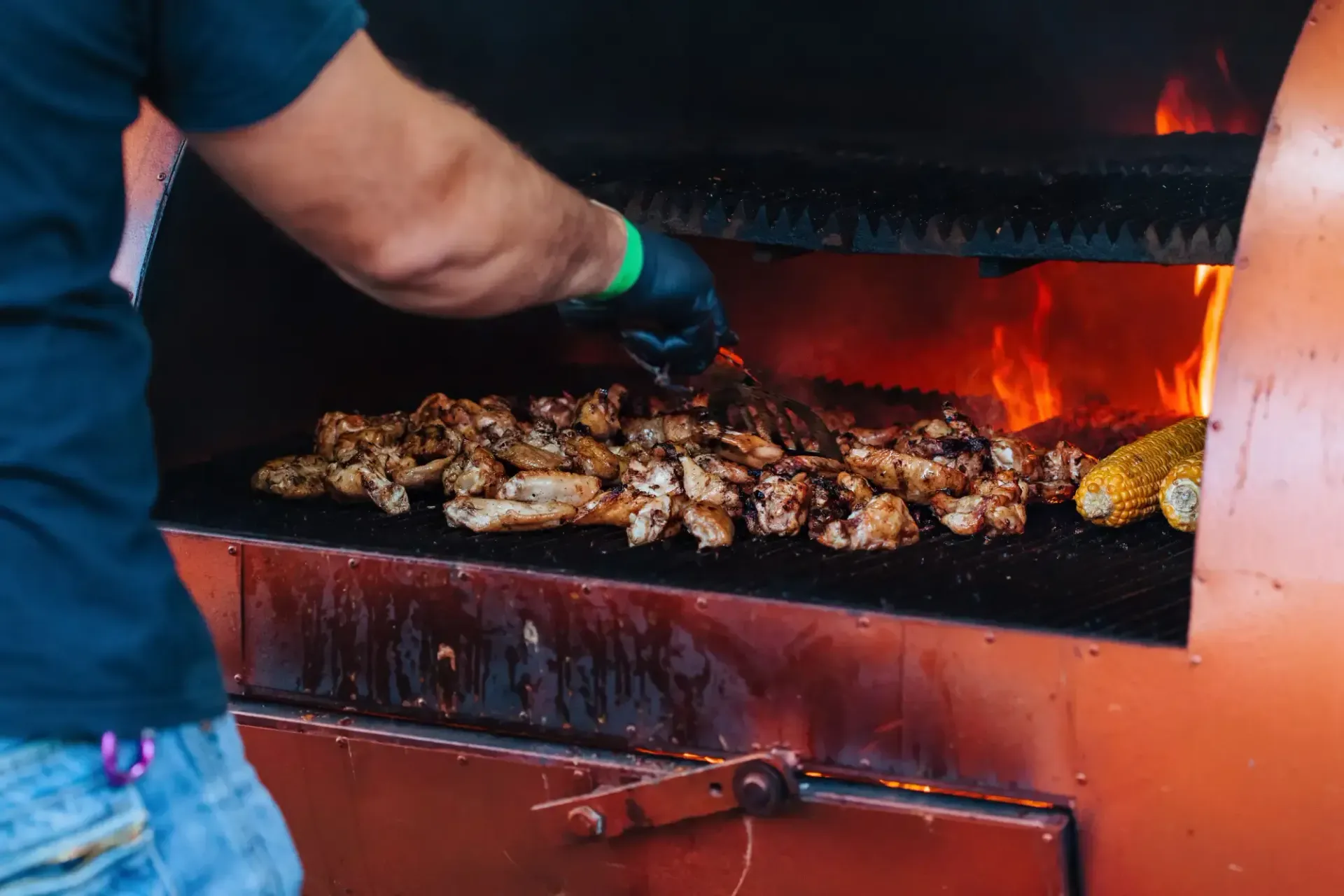
Most people have heard of caramelization, which is simply sugar browning under high heat. The Maillard reaction is its more complex cousin: it is what happens when the proteins and natural sugars on the surface of the meat react together with heat to create hundreds of new savoury flavour compounds and a deep brown colour. It is the same reaction that browns a seared steak or a loaf of bread, just happening far more slowly.
Here is the interesting part for barbecue. This browning usually needs fairly high heat, but a long smoke runs low, roughly 105°C to 135°C. What low-and-slow gives up in speed, it makes up in time. Over many hours, the Maillard reaction creeps forward gradually, layering colour and flavour far deeper than a fast, hot cook ever could. That is why a properly smoked brisket tastes richer and more complex than the same cut roasted quickly. Time is truly doing all the heavy lifting.
How Smoke Builds Colour and a Crust That Won’t Rub Off
Wood smoke is not just a smell in the air. It carries real compounds that settle onto the wet surface of the meat as it cooks. There, they dissolve into the moisture and spices of the rub and slowly dry down, cook after hour, into a solid, dark mahogany coat that is bonded to the meat. This is why you cannot wipe good bark off with a finger. It has become part of the surface.
The takeaway for a guest is simple: that deep colour and concentrated flavour are earned over hours of real wood smoke. There is no shortcut, no sauce, and no spray that reproduces it.
The Pitmaster’s Ingredient Blueprint
Not every rub builds good bark. The physical texture of what goes on the surface matters as much as the flavour. The table below shows how a few key choices shape the final crust.
| Rub or Surface Element | What It Does on the Surface | Result on the Plate | Common Mistake |
|---|---|---|---|
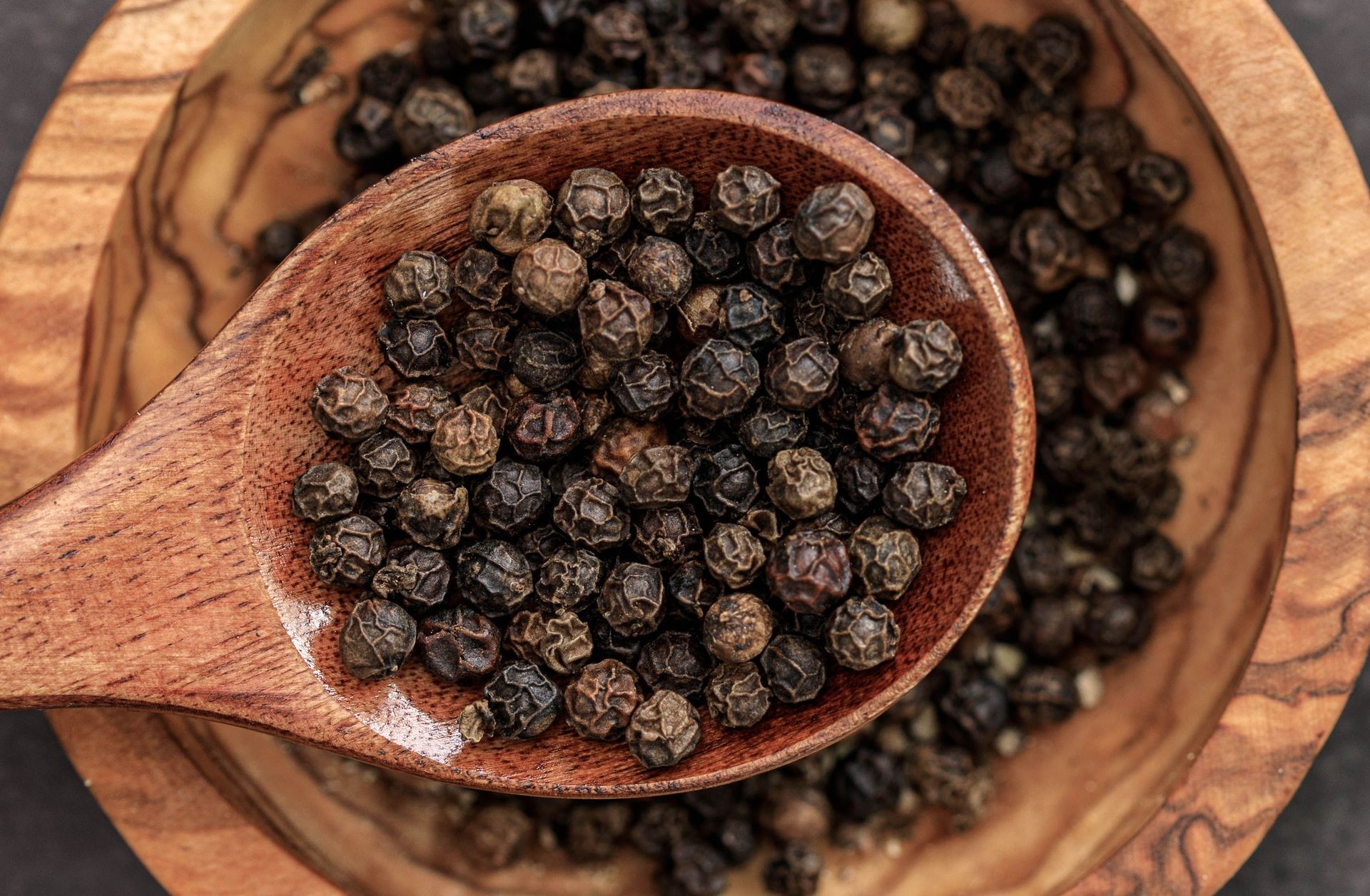
| Coarse black pepper (16-mesh) | Its rough texture creates ridges across the surface that catch and hold wood smoke. | A dense, textured crust with real bite. | Fine table pepper packs down into a muddy paste that seals the surface instead of catching smoke. |
| Kosher salt | Dissolves into surface moisture and draws out proteins that turn tacky. | A sticky base that anchors the rest of the rub to the meat. | Fine iodized salt melts too fast and skips the tacky stage; over-salting overwhelms the meat. |
| Rendering fat cap | Melts slowly and bastes the rub from above as it renders down. | A rich, glistening bark that carries flavour deeper. | Leaving the fat cap too thick creates greasy patches where bark cannot set. |
Heat, Moisture, and the Infamous Stall
If you have ever watched a brisket’s temperature climb steadily and then simply stop for hours, you have met the stall, and it is one of the most misunderstood moments in a long cook.
Why the Stall Happens (and Why It’s a Good Sign)
As the meat heats up, moisture evaporates off its surface, and evaporation cools things down, the same way sweat cools skin. For a stretch in the middle of a long cook, that cooling effect balances the heat going in, and the internal temperature plateaus. It can hold there for hours. New cooks panic and crank the heat. Experienced ones know to hold steady and let it ride. Food scientists have confirmed evaporative cooling as the true cause of the stall.
That evaporation is also doing something important: it is what sets the bark. Manage it well and the surface dries into a firm, defined crust. Rush it, or trap the meat in a humid environment, and the bark stays soft and pale. Riding out the stall patiently is part of what earns a proper crust.
Why Airflow Changes Everything
A traditional offset pit is engineered so heat and smoke roll continuously across the meat. That moving air constantly pulls moisture off the surface, letting the rub dry down into a clean, firm shell. A low-airflow cooker, by contrast, traps humid air around the meat, and the surface effectively steams in its own juices, never setting into true bark.
This principle is exactly why equipment matters at catering scale. BBQ Feast’s commercial smokers are built to keep air and smoke moving evenly around large batches of meat, reproducing the airflow of a traditional pit for dozens of briskets at once, so every guest at a 300-person event gets the same firm, flavourful bark.
Local Flavour: Southwestern Ontario Hardwoods
The wood a pitmaster burns leaves its mark on the bark, and Southwestern Ontario, around the Great Lakes basin, grows some of the best smoking woods in the country.
Sugar Maple and Orchard Woods for Colour and Sweetness
Local sugar maple, the same tree that gives us syrup, carries a natural sweetness that produces a lighter, gentler smoke. It establishes an early golden-brown base colour and a mellow sweetness that suits poultry and pork especially well. Orchard woods like apple and cherry, common across the region, do similar work with a fruity edge.
Oak and Hickory for Deep, Dark Brisket Bark
For the heavy, dark crust that a long-haul brisket demands, denser hardwoods do the job. White oak and shagbark hickory burn hotter and put out a stronger smoke that drives a deeper, near-black bark. Many of the best results come from blending: a base of oak or hickory for depth, with a little maple or fruitwood for colour and balance. It is a regional approach to a Southern tradition, and it is part of what gives BBQ Feast’s barbecue its particular character.
Bringing Professional Pitwork to London Events
Understanding the science is one thing. Reproducing it consistently for a wedding of 200 or a corporate BBQ of a thousand is another entirely, and it is the harder problem BBQ Feast has spent decades solving.
We are a family business, cooking authentic Southern-style barbecue from our farm in Lakeside, Ontario, and catering across London and the surrounding municipalities since 1998. The long-smoke items, brisket and pork shoulder among them, are smoked overnight in our commercial smokers, where temperature, smoke, and airflow are held steady for the full 12-to-16-hour cook. On event day, the meats travel with our crew to your venue and are finished on-site over live charcoal, alongside rotisseries and grills for items cooked fresh. The result is barbecue with real, hours-in-the-making bark, delivered at a scale and consistency that a backyard cook simply cannot match.
For hosts across the Forest City and the Thames River corridor, that means the depth of flavour of true low-and-slow barbecue, without compromise, at any guest count. Our
professional event catering services bring the pits, the fire, the equipment, and the decades of experience that put a proper crust on every serving.
Bringing Professional Pitwork to London Events
Understanding the science is one thing. Reproducing it consistently for a wedding of 200 or a corporate BBQ of a thousand is another entirely, and it is the harder problem BBQ Feast has spent decades solving.
We are a family business, cooking authentic Southern-style barbecue from our farm in Lakeside, Ontario, and catering across London and the surrounding municipalities since 1998. The long-smoke items, brisket and pork shoulder among them, are smoked overnight in our commercial smokers, where temperature, smoke, and airflow are held steady for the full 12-to-16-hour cook. On event day, the meats travel with our crew to your venue and are finished on-site over live charcoal, alongside rotisseries and grills for items cooked fresh. The result is barbecue with real, hours-in-the-making bark, delivered at a scale and consistency that a backyard cook simply cannot match.
For hosts across the Forest City and the Thames River corridor, that means the depth of flavour of true low-and-slow barbecue, without compromise, at any guest count. Our professional event catering services bring the pits, the fire, the equipment, and the decades of experience that put a proper crust on every serving.
Final Thoughts
Bark is a small word for a lot of craft. It is the visible, edible proof that meat was cooked slowly, over real wood, by someone who understood what they were doing. The chemistry behind it, Maillard browning, smoke settling into the surface, moisture setting the crust, fat rendering through, all comes down to a single principle: great barbecue takes time and attention, and there is no shortcut that fakes the result.
That is the standard BBQ Feast holds on to for every event, whether it is an intimate backyard gathering or a festival for thousands. If you are planning a milestone celebration, a rustic wedding, or a major event across London and Southwestern Ontario, we would love to bring that depth of flavour to your table.
Frequently Asked Questions
Why does coarse black pepper make better bark than fine ground pepper?
Coarse pepper, around 16-mesh, has a rough texture that creates tiny ridges across the meat’s surface. Those ridges catch and hold wood smoke, building a dense, textured crust with real bite. Fine ground pepper packs down flat and forms a muddy paste that seals the surface instead, so smoke cannot grip and the bark turns out thin and pasty.
Does spritzing the meat with apple juice or water change the bark?
Yes. Lightly spritzing the surface during a long cook slows the surface from drying too fast, keeps the rub from scorching, and gives smoke a moist surface to cling to, which can deepen colour. Spritz too often, though, and you wash away rub and cool the surface, which softens the bark. Used sparingly, it is a helpful tool; overused, it works against you.
What does wrapping in foil (the "Texas Crutch") do to the bark?
Wrapping a brisket in foil partway through, known as the Texas Crutch, pushes it through the stall faster and locks in moisture. The trade-off is the bark: foil traps steam, which softens the crust you spent hours building. Wrapping in breathable butcher paper instead lets some moisture escape, protecting the bark better while still speeding the cook. Whether to wrap at all is a genuine judgment call, and good pitmasters differ on it.
Does a pink smoke ring under the surface mean the bark is correct?
Not exactly. The pink smoke ring and the bark are two separate things. The smoke ring is a reaction between smoke and the meat just below the surface, and it forms early in the cook. The bark is the crust on the outside, built over many hours. You can have a great smoke ring and mediocre bark, or the reverse. Both are signs of a real low-and-slow cook, but one does not guarantee the other.
Why does higher fat content improve the bark?
As fat renders during the long cook, it slowly bastes the surface from above and within, carrying fat-soluble flavour into the rub and keeping the crust rich rather than dry and brittle. Well-marbled meat, and a properly trimmed fat cap, give you a glistening, flavourful bark. Too little fat leaves the bark harsh; too much, untrimmed, leaves greasy patches where bark cannot set. Balance is the goal.