Outdoor BBQ Catering for Parties, Weddings, and Corporate Events
Outdoor events have a different rhythm than indoor dinners. Guests drift between conversations, plates come together at their own pace, and the food is part of the entertainment. A well-run BBQ catering operation fits that rhythm: hardwood smoke in the air, meat finished over live fire, and sides laid out so people can graze on their own time.
BBQ Feast has been catering authentic Southern BBQ across Southern Ontario since 1998, with thousands of successful events on record, from private gatherings of 50 guests to corporate celebrations of 5,000 or more. This guide covers what outdoor BBQ catering actually looks like in practice: the events it suits, the menu structure that works, the service options to choose between, the questions to ask before you book, and the mistakes that come up again and again. It is the same conversation we have with clients when they reach out to BBQ Feast about their event.
Key Takeaways
- Outdoor BBQ catering scales from private gatherings of 50 guests to corporate events of 5,000 or more, with the right operator.
- A well-built menu covers smoked mains, real sides and salads, true vegetarian entrées, and drinks. Nobody should feel like an afterthought.
- Book early. Good caterers commit months out, especially for weddings and large corporate events.
- Add 10 to 15 percent to your guest count, and have a weather backup plan in writing.
- Look for a caterer with the equipment and operational capacity for your event size: commercial smokers, charcoal pits, rotisseries, generators, refrigeration, handwashing stations, tenting, and the crew to run it all.
What Is Outdoor BBQ Catering and How It Works?
Outdoor BBQ catering is a full-service food operation set up at the location of your event, whether a backyard, a wedding venue, a corporate park, or a community space. The defining difference from regular catering is the live fire. Real BBQ catering means hardwood smoke, charcoal pits, and on-site finishing, not just trays of pre-cooked food reheated on a chafing dish.
A serious catering operation also brings the infrastructure to make outdoor service work at any scale: commercial smokers, charcoal pits, and rotisseries for cooking and presentation, buffet tables, linens, serving equipment, generators for power, refrigeration, handwashing stations, tenting for weather coverage, and the staffing to keep service moving. The bigger the event, the more this infrastructure matters.
A typical engagement runs through these stages:
- Planning and menu customization. You and the caterer work through guest count, menu, sides, dietary needs, and timing.
- Site walk-through (where needed). For weddings, corporate events, and complex venues, the caterer will inspect the site ahead of time for power access, smoke clearance, parking, and equipment placement. Smaller, straightforward events usually skip this step.
- Setup. The team arrives early to set up cooking stations, buffet lines, and seating support. Setup time ranges from a few hours for smaller events to most of a day for large corporate functions and festivals.
- Service. Depending on the package, this can mean on-site finishing over live fire, live carving stations, tableside service, or hot drop-off delivery.
- Cleanup. A full-service caterer handles breakdown of their stations and equipment. Guest tents, plates, and clearing services are typically available as add-ons.

Types of Events Perfect for BBQ Catering
BBQ is more versatile than its casual reputation suggests. With the right service style and presentation, the same caterer can run a casual backyard cookout one weekend and an upscale wedding reception the next. For most outdoor events, it is one of the strongest catering options available.
Backyard Parties and Private Gatherings
BBQ catering fits this category naturally. The food invites people to mingle, plates are easy to refill, and there is no rigid timing to disrupt the conversation. Reunions, birthdays, graduation parties, holiday cookouts. The format works at any guest count, and the smell of live fire and slow-smoked meat tends to do half the entertaining for you.
Weddings and Outdoor Receptions
BBQ catering works across the full wedding spectrum, from rustic outdoor receptions to high-end venues. The food works for crowds, the menu and presentation scale with the budget, and a properly run BBQ spread can be every bit as impressive as a plated dinner when the styling is handled with care. Whole brisket carved tableside, smoked meats on raised wooden boards, premium proteins like AAA Striploin or Cedar Plank Salmon, and grazing tables built around the live-fire station turn the food into part of the show. BBQ Feast regularly caters both small and large weddings across Southern Ontario, and during peak season runs up to four weddings on a single Saturday.
Corporate Events and Office Celebrations
Corporate catering is one of BBQ Feast's largest service areas. The format takes pressure off the room and gives people a reason to mix, which is often what a team-building day or product launch actually needs. Common corporate events we cater include:
- Employee appreciation events and staff recognition days
- Company picnics and summer celebrations
- Customer appreciation events and client hospitality days
- Family days for staff and their families
- Product launches and milestone celebrations
- Community and corporate festivals
- Multi-shift events for production facilities and large offices
We scale from small office gatherings to multi-shift corporate days serving thousands of guests across the day, with the operational capacity to run up to five events on a single weekday during peak season.
Festivals and Community Events
For festivals, fundraisers, and community events, BBQ catering scales. The same operation that catered a 150-person wedding can run a full day at a community fair, with the pit working as both food source and atmosphere. Hardwood smoke does more for foot traffic than any signage.
Popular BBQ Catering Menu Ideas
A BBQ spread is more than the grilled meats. The best menus give every guest something they want, from the meat eaters to the vegetarians, without anyone feeling like they got the consolation plate. BBQ Feast builds custom menus for every event, but the items below are the most frequently requested.
Grilled and Smoked Meat Options
BBQ Feast offers a wide selection of proteins built around our slow-smoking and live-fire setup. Most events feature two to four proteins, mixed and matched from the categories below.
Smoked classics
Long-smoke items that anchor a traditional BBQ menu, smoked overnight in our commercial smokers and finished or pulled on-site:
- AAA Beef Brisket (over 14 hours in our commercial smokers)
- Pulled Pork (bone-in shoulder, 8 to 9 hour smoke)
- Pulled Chicken
- BBQ Chicken (halves, quarters, or thighs)
- Pork Ribs
- Slow Smoked Turkey
Premium grilled and roasted cuts
A step up in presentation for weddings, upscale corporate events, and any occasion that calls for it. Often paired with smoked classics for a mixed menu:
- AAA Striploin
- Beef Tenderloin
- Cedar Plank Salmon
Live fire and Brazilian-style
Cooked from raw on-site over open flame, with the live-fire process turning the cooking into part of the event experience:
- Brazilian Picanha (25-inch rotisserie skewers)
- Brazilian Sausage
- Shrimp Skewers
Sides and Salads
Sides and salads do a lot of work on a BBQ plate. They balance the richness of the smoked meats, give vegetarian and lighter-eating guests real options, and let you tailor a menu to the season and the crowd. Clients typically pick four to six from the BBQ Feast lineup, which includes:
- Creamy Potato Salad with Egg & Bacon
- Traditional Coleslaw
- Macaroni and Cheese
- Feast Baked Beans
- Hot Seasonal Vegetables
- Fresh Vegetable Medley
- Grilled Veggie Skewers
- Rice Salad
- Black & White Bean Salad
- Tri-Coloured Tomato & Cucumber Salad
- Thai Cucumber Salad
- Tossed Spring Mix Garden Salad
Cornbread and brioche buns round out the table. The mix covers everything from creamy comfort sides to lighter, vinegar-based salads that cut the richness of the smoked meats.
Vegetarian and Vegan Option
Vegetarian and vegan guests deserve real main-dish options, not bowls of side salads. BBQ Feast offers true entrée options for plant-based eaters:
- Vegan Burgers
- Quinoa Entrée Salad
- Vegetable Kabobs
- Vegan BBQ Jackfruit
Most of the sides and salads above are also vegetarian or vegan-friendly, so plant-based guests can build a full plate without compromise.
Drinks
Hydration matters at outdoor events, especially in the heat. Lemonade and sweet tea are thematic and easy to scale. Self-serve drink stations work for most setups; for larger or alcohol-served events, a dedicated beverage attendant is worth it. For dessert, simple options like cookies, brownies, and fruit platters are typically all the BBQ format calls for.
The Live Fire Experience
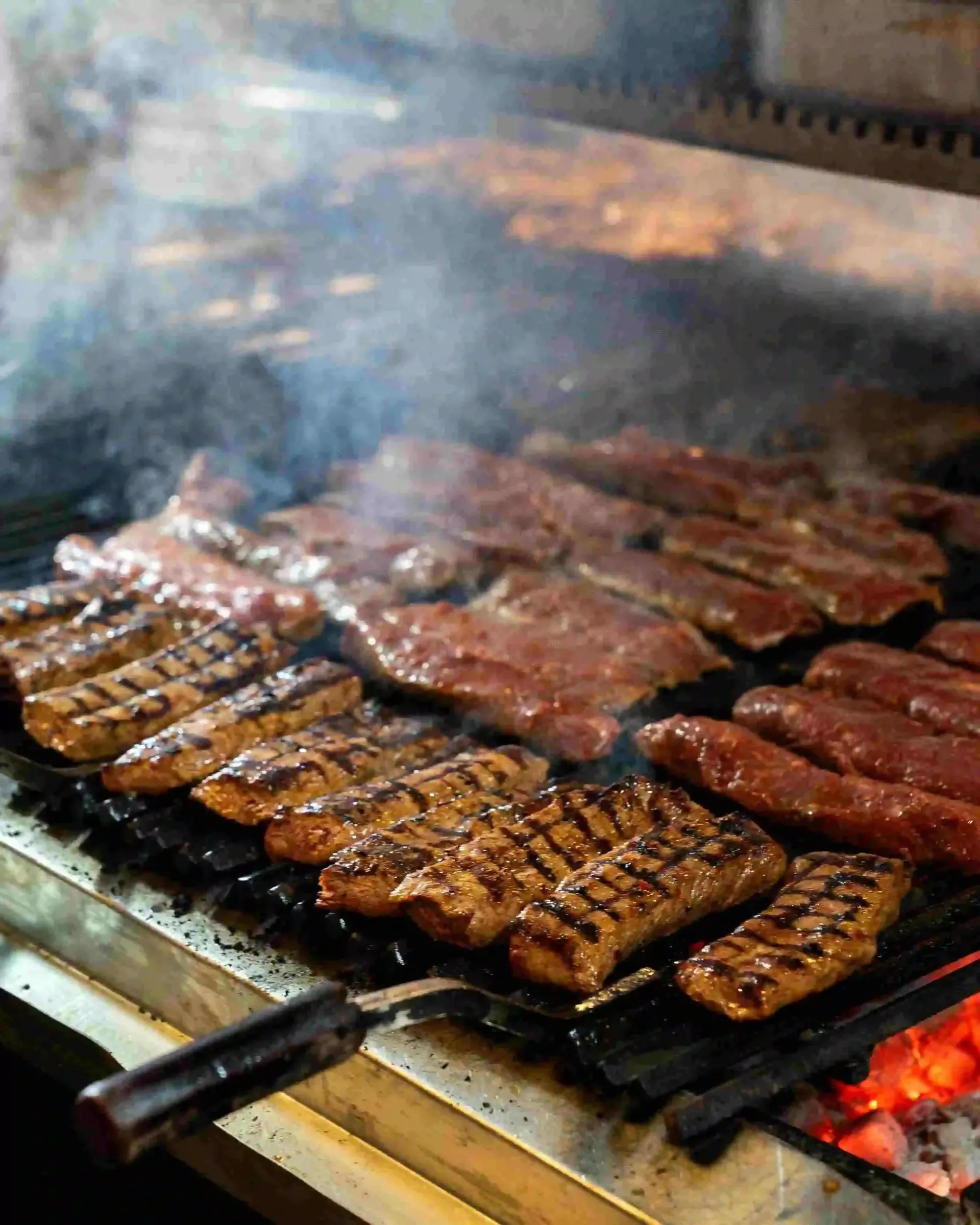
For many guests, the live fire is half the appeal of BBQ catering. The visual of glowing charcoal pits, the sound and smell of meat finishing over open flame, rotisseries turning, smoke drifting across the lawn. This is part of the entertainment, not just the cooking. It draws guests toward the cooking station, starts conversations, and gives people something to gather around.
BBQ Feast leans into this on every staffed event. Our on-site setup uses authentic charcoal pits with live wood and fire for finishing brisket, pork, and ribs. Depending on the menu, we run live carving stations, whole pig and pulled pork stations, rotisseries for chicken, 25-inch Brazilian-style skewers over open flames, and dedicated live charcoal grilling. Where the menu and venue allow, the cooking is set up so guests can watch the process, smell the smoke, and interact with the cooks during service. The atmosphere this creates is one of the biggest differences between a BBQ caterer and a traditional one.
Different BBQ Catering Service Styles
There are two main service formats for BBQ catering. BBQ Feast offers both.
- Drop-Off Catering. Hot, ready-to-eat food delivered to your venue. The right call for casual gatherings and events where you do not need on-site staff or live cooking. The trade-off is you lose the atmosphere of on-site smoke and live fire.
- Live and Buffet-Style Service. This is the full experience. The crew arrives hours before guests, sets up cooking stations where smoke and heat can be managed safely, and finishes the food in view of the event. Food stations are set on linen-covered tables, often with meat carved or pulled to order. This is the style that turns BBQ catering from food service into part of the entertainment.
At BBQ Feast, staffed service runs as a hybrid that balances consistency with on-site execution. The long overnight smoking happens at our facility, where briskets run a 14-hour-plus multi-stage cook in our commercial smokers and bone-in pork shoulders go 8 to 9 hours. On the day of the event, our crew transports the smoked meats to your venue and finishes, prepares, or pulls them on-site over charcoal pits, alongside rotisseries and Brazilian-style skewers for items prepared from raw. This combination gives you the consistency that 200- or 2,000-guest events demand with the live-fire atmosphere guests remember.
Catering at Scale: Logistics and Operational Capacity
BBQ catering looks similar across providers at small scale. The difference shows up at larger events, where infrastructure, logistics, and operational capacity decide whether 500 guests get fed smoothly or stand in line for 45 minutes. A few things to look for when sizing up a caterer for a larger event:
- Equipment capacity. Multiple commercial smokers, charcoal pits, rotisseries, generators, refrigeration, handwashing stations, and tenting are what make outdoor service viable for hundreds or thousands of guests. BBQ Feast brings full event infrastructure, not just food.
- Service speed. Double-sided buffet stations (where guests serve themselves from either side) effectively double throughput at the same footprint. Multiple service points, with dedicated stations for meats, sides, drinks, and desserts, spread the crowd and shorten every line.
- Multi-event capacity. A serious operation can run multiple events on the same day. BBQ Feast regularly runs up to five events per weekday and four weddings on a Saturday during peak season. That capacity means we can take on your event without compromising staffing or quality elsewhere.
- Event logistics planning. Site walk-throughs, power and water assessments, timing coordination with venues, and detailed staffing plans are the work that happens before the food. A caterer who skips this stage at a large event is asking for trouble on the day.
- Menu customization at scale. Catering for 200 and catering for 2,000 are different jobs. Look for a caterer who builds custom menus around your guest demographic, dietary requirements, and event flow rather than handing you a fixed package.
How to Choose the Right BBQ Caterer
- Check Experience and Reviews. Look at their website, their Google profile, and their reviews. Specifically, look for clients who hosted events like yours. A caterer who runs corporate lunches every day is not necessarily the right team for a 200-person wedding, and vice versa. Photos of their setup tell you a lot. A real BBQ catering operation has pictures of the rig, the meat, and the bark.
- Ask About Menu Customization. Most caterers will adjust their menus, but the depth varies. The strongest catering teams will send you four or five menu options at different price points and service levels rather than handing you a single fixed menu. Confirm what is included, what costs extra, and how dietary restrictions are handled.
- Confirm Equipment and Setup. Ask what the caterer brings versus what you provide. Commercial smokers, charcoal pits, rotisseries, buffet tables, linens, serving equipment, generators, refrigeration, handwashing stations, tenting, staffing. List it out. For larger events, infrastructure is the difference between a smooth day and a scramble. Confirm cleanup scope (most caterers include cleanup of their own stations and equipment with staffed service, with guest tents and clearing typically available as add-ons).
- Ask About Operational Capacity. How many events can they run on the same day? How many guests have they served at a single event? A caterer who routinely runs multiple Saturday weddings or thousand-guest corporate days has the infrastructure and staffing depth that smaller operations simply do not.
- Discuss Pricing and Packages. Most BBQ catering is custom quoted rather than fixed per-guest, with pricing sliding based on menu, service style, guest count, location, and equipment requirements. When comparing quotes, make sure you are comparing the same scope. A staffed buffet against a drop-off is not apples to apples.
- Ask About Tastings. Many caterers, BBQ Feast included, offer tastings by appointment, typically for weddings and larger corporate events where the menu is part of the planning conversation.
BBQ Catering Setup Ideas for Outdoor Events
Once the menu and team are settled, the setup decides whether the day actually runs smoothly. A few things to think through:
Layout for Food and Seating
- Keep the hot end of the cook (the firebox, charcoal, open flame) at a safe distance from where guests stand. A working pit is something guests will gravitate toward, but you do not want them in the smoke path or near the heat.
- Round tables encourage conversation and read well at weddings; long banquet tables build a communal feel for larger crowds and family-style events.
- Leave generous walking lanes between tables, especially around the buffet where lines build up.
- Trash and recycling should be easy to find but not in the middle of the seating area.
Weather Planning and Backup Options
- Tents and canopies handle both sun and light rain. Sidewalls help with wind.
- For larger events, mix open and covered seating so guests can self-select.
- Hot food needs to stay hot, cold food needs to stay cold. Confirm with your caterer how they handle holding temperatures, especially in extreme heat or cold.
- Identify an indoor or hard-covered backup space ahead of time, even if you never use it.
Decoration and Theme Ideas
A BBQ setup brings its own atmosphere. The decorations should support it, not compete with it.
- Rustic backyard: checkered tablecloths, mason jars, wooden boards, string lights.
- Polished or upscale: linen napkins, chalkboard menus, coordinated signage, raised wooden serving boards.
Either way, the food presentation is the visual centerpiece. A grazing table or brisket station built with care will do more than a wall of decor.
Guest Flow and Serving Stations
Poor guest flow is the most common complaint at otherwise great events. A single buffet line for 150 people will move slowly. Splitting the spread into stations (one for meats, one for sides, one for drinks, one for desserts) spreads the crowd across the space and shortens every line.
Double-sided buffet stations, where guests can serve themselves from either side, are particularly effective for events over 200 guests. They double throughput without doubling footprint, and they prevent the bottleneck that single-sided lines create. Multiple service points across the venue have the same effect at even larger scale.
Label your dishes clearly. Guests should not have to ask what they are picking up. For larger events, station a staff member at each key spot to keep things moving and answer questions about ingredients or allergens.
How BBQ Catering Pricing Works
BBQ catering does not lend itself to fixed per-guest pricing the way some catering categories do. Every event is custom quoted, with the final number depending on a few factors:
- Menu selection. Premium proteins like AAA Beef Brisket, Beef Tenderloin, or Cedar Plank Salmon cost more than chicken or pulled pork. The number of proteins and the side dish selection also shift the total.
- Service style. Full live carving and on-site finishing with a staffed crew costs more than a hot drop-off delivery in disposable containers. The right choice depends on the event, not the budget alone.
- Guest count. Larger events benefit from volume pricing on the food, but they also require more equipment and staffing.
- Equipment and infrastructure. Events that need tenting, generators, refrigeration, and handwashing stations carry the cost of that infrastructure. For smaller events at venues that supply much of this, the cost drops accordingly.
- Location and logistics. Travel distance, venue accessibility, and timing all factor in.
The cleanest way to get an accurate number is to share your event details with a caterer (date, location, guest count, and what you have in mind) and ask for a custom quote. BBQ Feast typically sends four or five menu options at different price points so you can see what fits your budget before committing.
Common Mistakes to Avoid When Hiring BBQ Catering
- Booking Too Late. Good BBQ catering teams get booked weeks to months ahead, especially in peak season. There is also a cooking-side reason to book early: at BBQ Feast, brisket runs over 14 hours and bone-in pork shoulder 8 to 9 hours in our commercial smokers, and during wedding season we hold capacity for up to four Saturday events at a time. Book at least 4 to 8 weeks ahead for smaller events, and 3 to 6 months ahead for weddings and large gatherings. Final event details are typically locked in around 15 days out.
- Not Checking Menu Details. Every caterer is different. Review the full menu before you commit. Ask about portion sizes, dietary options (vegetarian, vegan, gluten-free, allergy-sensitive), and whether a tasting is available. A tasting is worth the time, especially for weddings.
- Ignoring Weather Planning. Always have a contingency plan. Ask your caterer how they handle heat, rain, and wind, especially around food safety. Holding hot food in 95-degree weather is a different problem than holding it in 65-degree weather, and the answer affects how the menu and service should be structured. Loop in your caterer on the weather plan, not just the venue.
- Underestimating Guest Count. Overestimating costs a little extra. Underestimating ruins the event. Plus-ones and last-minute additions are normal. Add 10 to 15 percent to your final headcount when you sign the contract.
- Underestimating the Infrastructure Required. At larger events, the cooking is only part of the job. Tenting, generators, refrigeration, handwashing stations, service stations, staffing, and event logistics matter just as much. A caterer who shows up without the infrastructure for your scale is the most common reason large outdoor events go sideways.
Why BBQ Feast?
For anyone planning outdoor BBQ catering in Southern Ontario, here is the short version of what BBQ Feast brings to the table:
- Family owned and operated since 1998. More than 25 years of catering experience and thousands of successful events on record.
- Scale that matches your event. We routinely serve 50 to 5,000+ guests, with the operational capacity to run up to five events per weekday and four weddings on a Saturday during peak season.
- Full event range. From small backyard gatherings to high-end weddings, multi-shift corporate events, and large community festivals, we adapt the service style to fit.
- Live charcoal cooking. On-site charcoal pits, rotisseries, live carving stations, whole pig and pulled pork stations, Brazilian-style skewers, and live-fire grilling turn the food preparation into part of the event experience.
- Specialized equipment and infrastructure. We bring commercial smokers, charcoal pits, rotisseries, buffet tables, linens, serving equipment, generators, refrigeration, handwashing stations, and tenting as required for your event.
- Southern Ontario coverage. We service Waterloo Region, Guelph, Cambridge, London, Woodstock, Stratford, Hamilton, and the GTA.
Final Thoughts
Outdoor BBQ catering works because the food and the setting reinforce each other. Smoke in the air, plates that invite second helpings, a layout that gives guests room to drift between conversations. It is a format almost no other catering style matches.
If you are planning an event in Southern Ontario,
reach out to BBQ Feast. We will walk through the menu, the setup, and the day with you, and send you four or five custom menu options at different price points so you can choose what fits.
Frequently Asked Questions
How far in advance should BBQ catering be booked?
Book 4 to 8 weeks ahead for smaller events. 3 to 6 months ahead for weddings and large gatherings. Final event details (guest count, menu specifics, timing) are typically confirmed about 15 days before the event.
Can BBQ catering handle large events?
Yes. BBQ Feast regularly caters events ranging from 50 to 5,000 or more guests. At larger scale, the format relies on double-sided buffet stations, multiple service points, and rolling cook schedules to keep food coming throughout service. The operational capacity to run multiple events per day (up to five on a weekday, four weddings on a Saturday during peak season) is one of the things that separates a serious BBQ catering operation from a typical one.
What equipment does a BBQ caterer bring?
A full-service team brings commercial smokers and charcoal pits, rotisseries, buffet tables, linens, serving equipment, generators, refrigeration, handwashing stations, and tenting where needed, along with staffing for the event. Long-duration smoking is done at the caterer’s facility ahead of the event; the meats are finished and presented on-site over live fire. Guest tents, plates, and clearing services are typically available as add-ons. Always confirm what is included in your specific package.
What areas does BBQ Feast service?
BBQ Feast caters across Southern Ontario, including Waterloo Region, Guelph, Cambridge, London, Woodstock, Stratford, Hamilton, and the GTA.
Are tastings available?
Yes. BBQ Feast offers tastings by appointment, typically arranged for weddings and larger corporate events where menu selection is part of the planning process.
Are vegetarian and vegan options available?
Yes. BBQ Feast offers real vegetarian and vegan entrées, not just side salads. The menu includes Vegan Burgers, Quinoa Entrée Salad, Vegetable Kabobs, and Vegan BBQ Jackfruit, alongside a wide selection of vegetarian and vegan-friendly sides.
What happens if the weather changes?
A good caterer plans for it. Discuss contingencies during planning: tents, canopies, holding-temperature strategy, and a designated backup indoor space. For larger events, your caterer should bring their own tenting and weather coverage as part of the package.